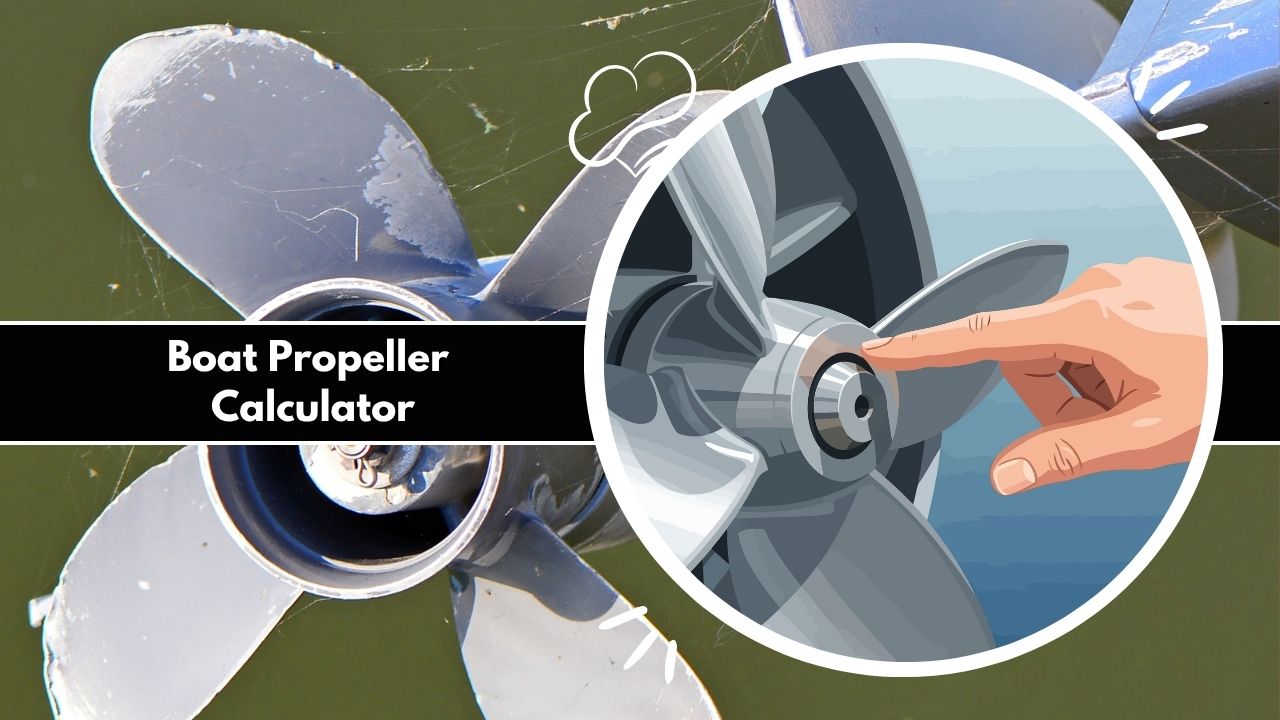
Use the ultimate Boat Propeller Calculator to instantly determine static thrust, power output, and torque. Optimize your engine’s efficiency and propulsion system today.
Calculated Propeller Performance
Static Thrust vs. Propeller Pitch (Live Chart)
See how Static Thrust changes with a $\pm 20\%$ variation in Pitch around your input value.
Performance Comparison Table
Compares your results with typical marine propeller values (highlighted for the selected type).
| Propeller Type | Typical Static Thrust Range (N) | Typical RPM Range | Your Thrust Status |
|---|---|---|---|
| Inboard | 1000–10000 | 1000–3000 | |
| Outboard | 500–5000 | 2000–6000 | |
| Sterndrive | 800–8000 | 1500–4000 |
In the complex world of marine propulsion, efficiency is everything. The Boat Propeller Calculator is the definitive online tool designed to estimate critical performance metrics for any propeller-driven watercraft—from small electric outboards to large inboard diesel yachts.
This powerful utility helps marine engineers, boat owners, naval architects, and DIY enthusiasts translate engine RPM and propeller geometry (Diameter and Pitch) into actionable thrust and power data.
Its core purpose is to validate design choices, predict performance before water trials, and identify opportunities for optimization, ensuring your vessel achieves maximum speed and fuel economy.
The Modern Marine Propulsion Challenge
The marine industry is undergoing a rapid transition toward sustainable, high-efficiency systems. A key trend for 2024-2025 is the widespread adoption of high-voltage electric propulsion systems in leisure and commercial vessels.
This shift puts even greater pressure on propeller design, as electric motors demand precise matching to the prop to maximize battery range and efficiency.
The Boat Propeller Calculator is an essential instrument in this new era, allowing quick iteration and validation of electric motor-propeller pairings.
How the Boat Propeller Calculator Works (Step by Step)
Our Boat Propeller Calculator uses industry-standard, simplified equations to deliver reliable results instantly. Following these simple steps ensures accurate results:
Step 1: Select Your System and Units
- Propeller Type: Choose between Inboard, Outboard, or Sterndrive. This selection adjusts the tool’s internal comparison data for context.
- Unit System: Switch between Metric (meters, Newtons, Watts) and Imperial (feet, lbf, horsepower). The calculator performs internal conversions to SI units for core calculation but presents results in your preferred display unit.
Step 2: Input Core Propeller Geometry and Engine Data
- RPM: Input the revolutions per minute of the propeller shaft. (This is RPS * 60).
- Diameter: The physical diameter of the propeller blade circle.
- Pitch: The theoretical distance the propeller would advance in one revolution if traveling through a soft solid (e.g., 0.4 meters or 1.3 feet).
Step 3: Define Environmental and Efficiency Factors
- Water Density: Input the density of the water. Use 1000 kg/m^3 for fresh water or 1025 kg/m^3 for salt water.
- Boat Velocity: The vessel’s speed (m/s or ft/s). Setting this to 0 calculates Static Thrust (important for docking or tow testing).
- Slip Ratio: This is the difference between the propeller’s theoretical pitch speed and the actual boat speed. Typical values range from 0.1 (10%) to 0.3 (30%) and are crucial for dynamic thrust calculations.
- Thrust Coefficient (Ct): A dimensionless factor (typically a value between 0.05 and 0.12) that accounts for the propeller’s design and blade geometry.
- Motor/Propeller Efficiencies (Eta_m and Eta_p): Input the mechanical efficiency of the motor/gearbox and the hydrodynamic efficiency of the prop itself, typically between 0.7 and 0.95.
Step 4: Calculate and Interpret the Results
Click Calculate & View Results to generate the comprehensive report.
- Static Thrust: The force generated when the boat is stationary (e.g., docking). This is a key measure of acceleration and low-speed control.
- Required Power Output: The mechanical power (Watts or hp) required at the shaft to produce the calculated thrust.
- Thrust-to-Power Ratio: A critical efficiency metric showing how much thrust is generated per unit of power consumed.
The tool also generates a live chart showing how your static thrust changes with small variations in Pitch, highlighting the sensitivity of this input.
Why Use the Boat Propeller Calculator?
Choosing the right propeller is more than just matching diameter to the boat; it’s about maximizing the efficiency of energy transfer from the engine to the water. This Boat Propeller Calculator provides several unique advantages:
- Time and Cost Savings: Avoid expensive, time-consuming water trials. Validate multiple propeller specifications and engine parameters in minutes from your desk, reducing the risk of purchasing mismatched components.
- Accuracy and Optimization: By using established hydrodynamics principles and allowing precise input of coefficients, the calculator provides an accuracy level sufficient for initial design optimization. It helps you dial in the ideal pitch and diameter to ensure the engine operates within its optimal RPM range.
- Comparative Analysis: The integrated performance table compares your calculated static thrust against typical industry ranges for Inboard, Outboard, and Sterndrive types, giving immediate feedback on whether your results are reasonable or if an input might be flawed.
- Instant Design Sensitivity: The live Pitch vs. Thrust chart visually demonstrates how sensitive your thrust is to changes in the propeller’s pitch, aiding in fine-tuning for specific operational profiles (e.g., prioritizing low-speed thrust vs. high-speed efficiency).
Understanding Results from the Boat Propeller Calculator
To truly master marine efficiency, you must understand what each output from the Boat Propeller Calculator signifies for your vessel’s performance. Every metric is interconnected, defining the thrust, speed, and fuel consumption of your boat.
Static Thrust vs. Dynamic Thrust
- Static Thrust: This is the maximum force the propeller can generate when the boat is not moving. It’s vital for applications requiring high pulling power or rapid acceleration, such as towboats or fishing vessels operating in strong currents. The calculation for static thrust is heavily influenced by the propeller’s diameter, the density of the water, and the RPM.
- Dynamic Thrust: This is the force generated when the boat is traveling at a specific velocity (the value you input for Boat Velocity). As the boat moves faster, the water entering the prop is already moving, which generally reduces the net thrust delivered. For a planing hull, dynamic thrust must match the total drag (hydrodynamic resistance) at cruising speed to maintain steady velocity.
The Importance of the Thrust-to-Power Ratio
The Thrust-to-Power Ratio (often in Newtons per Watt or lbf per horsepower) is the ultimate measure of your propeller’s design effectiveness. A higher ratio means you are converting more of your engine’s power into useful forward motion.
| Ratio Status | Indication | Recommended Action |
|---|---|---|
| High Ratio | Excellent hydrodynamic design, potentially optimized for speed. | Confirm that the engine’s RPM is within the safe limit. |
| Low Ratio | Poor matching or inefficient propeller (too much slip, incorrect pitch). | Investigate a propeller with a different pitch or blade area. |
This metric from the Boat Propeller Calculator is indispensable for designers aiming to maximize the range of electric or hybrid vessels, where every Watt of power is critical.
Optimization Tips for Propeller Efficiency
Achieving peak performance requires balancing multiple variables. Use the Boat Propeller Calculator to run multiple simulations based on these optimization strategies:
Balancing Pitch and RPM
The single biggest factor in propeller optimization is the balance between pitch and RPM.
- Too Much Pitch: If the propeller pitch is too high for the engine, the engine will be overloaded (a condition known as lugging). It won’t reach its maximum rated RPM, leading to poor acceleration and reduced top speed. The Boat Propeller Calculator will show lower-than-expected thrust-to-power ratios in this scenario.
- Too Little Pitch: If the pitch is too low, the engine will over-rev (over-speeding) easily. While acceleration might be quick, top speed is limited because the prop is effectively moving less water per rotation.
- Optimization Strategy: Use the calculator to adjust the Pitch input until your required power output matches the engine’s rated horsepower at its target cruising RPM.
Minimizing Slip Ratio
Propeller slip is an unavoidable efficiency loss, but minimizing excessive slip is key. While 10% to 30% is typical, high slip (over 30%) suggests a problem.
- Causes of High Slip: Improper trimming (prop too close to the surface), cavitation (water vaporizing at the blade edges), or a dirty hull (increased drag).
- Calculator Insight: If your calculated dynamic thrust drops sharply from the static thrust, and your Slip Ratio input is high, it confirms significant energy loss. Consider increasing the propeller’s blade area or diameter (if space allows) to “bite” more water.
Performance Insights from Propeller Coefficients
The less intuitive inputs in the Boat Propeller Calculator—the Thrust Coefficient (Ct) and efficiencies—are where the specifics of your chosen propeller design manifest.
Thrust Coefficient (Ct) and Blade Design
The Thrust Coefficient (Ct) is a non-dimensional measure of how efficiently a propeller’s blade shape generates thrust. A higher Ct value (closer to 0.12) indicates a more aggressive or highly loaded propeller design, typically with more blades or a larger blade area ratio.
- High Ct Props (High Blade Area): Better for heavy boats, low-speed thrust, and reducing cavitation risk. They handle high power loads but may introduce more drag at high speeds.
- Low Ct Props (Low Blade Area): Better for high-speed boats with light loads, where minimizing friction is paramount.
When switching to a new prop design, consulting the manufacturer’s data for Ct and inputting it into the Boat Propeller Calculator is the fastest way to predict the thrust difference.
The Combined Effect of Eta_m and Eta_p
The tool separates Motor Efficiency (Eta_m) and Propeller Efficiency (Eta_p).
- Motor Efficiency (Eta_m): Reflects the power loss in the engine, gearbox, and shafting. For modern electric motors, this is often very high (0.9 to 0.95). For older combustion engines, it may be closer to 0.8.
- Propeller Efficiency (Eta_p): This is the hydrodynamic efficiency—the ratio of useful work done to the energy supplied. High Eta_p (e.g., 0.75 to 0.8) is the hallmark of a well-designed prop operating at its optimal speed.
The overall system efficiency is the product of the two. The current output calculated by the Boat Propeller Calculator directly reflects this combined efficiency when paired with your voltage input.
Common Mistakes and Misconceptions
The Myth of “More Power, More Speed”
One of the most common errors is assuming that a larger or more powerful engine will automatically translate to faster speeds. Without the correct propeller, the engine simply generates heat or operates outside its torque curve.
The Boat Propeller Calculator proves this by showing that if the RPM or Pitch inputs are mismatched to the engine, the power requirement will often spike unnecessarily, or the thrust gain will be marginal. The propeller acts as the essential transmission between the power source and the water.
Ignoring Water Density
Many boaters forget that water density changes significantly between fresh and salt water. Salt water is approximately 2.5% denser than fresh water (1025 kg/m^3 vs. 1000 kg/m^3).
- Impact: Running the same propeller at the same RPM in salt water will generate slightly more thrust and require slightly more power than in fresh water.
- Calculator Tip: Always adjust the Water Density input in the Boat Propeller Calculator based on your operating location for the most accurate results.
Advanced Use Cases and Applications
The versatility of the Boat Propeller Calculator extends beyond traditional boating.
Designing for Unmanned Surface Vessels (USVs) and Drones
USVs and autonomous underwater vehicles (AUVs) rely heavily on precise, low-power propulsion. For these systems, minimizing electrical current draw while maximizing low-speed maneuverability (static thrust) is paramount. The calculator can be used to:
- Iterate Propeller Design: Test dozens of Diameter and Pitch combinations to find the one that yields the best Thrust-to-Power Ratio.
- Estimate Battery Draw: The Current Draw output is a direct indicator of the necessary battery capacity and expected mission time for a given operating voltage.
Calculating Towing Force
For vessels engaged in towing (e.g., tugs or wake-sports boats), Static Thrust is the most important metric. By setting the Boat Velocity to 0, the Boat Propeller Calculator provides the maximum available towing force. This result, combined with the required power, determines the engine size needed for specific towing tasks without overloading the system.
Cavitation Prediction
While the calculator doesn’t directly predict cavitation, a very high calculated thrust output relative to typical range or a required power output that far exceeds the engine’s rating can be an early indicator of a propeller running too fast or too heavily loaded.
Cavitation occurs when water pressure drops below its vapor pressure, leading to bubbles that damage the prop and drastically reduce efficiency (manifesting as high actual slip).
Technical Details: The Calculation Logic
The Boat Propeller Calculator utilizes a robust, simplified physical model rooted in momentum theory and dimensional analysis, similar to those used in naval architecture for initial sizing. All core calculations are performed in SI units (Newtons, meters, kilograms).
The calculation for the required Shaft Power (P) is derived from the work done by the propeller, which is the product of the generated thrust and the effective speed of the propeller through the water, adjusted by the system efficiencies.
Key Formulas (using plain math notation):
Propeller Disk Area (A):
A = π × (Diameter / 2)²
Propeller Revolutions per Second (RPS):
RPS = RPM / 60
Effective Velocity of Water (V_eff), accounting for slip:
V_eff = RPS × Pitch × (1 – Slip Ratio)
Static Thrust (T_static) – Simplified Model:
T_static = Water Density × A × (RPS × Pitch)² × Thrust Coefficient × Propeller Efficiency
Required Shaft Power (P_shaft):
P_shaft = T_static × V_eff / Propeller Efficiency
Torque (Q):
Q = P_shaft / (2 × π × RPS)
The accuracy of this Boat Propeller Calculator is enhanced by its inclusion of the Thrust Coefficient (Ct), which bridges the gap between theoretical momentum and the real-world geometric complexities of a specific propeller blade.
For optimal results, users should reference propeller manufacturer data or standard naval engineering tables (such as those based on Wageningen or B-series propeller standards) for accurate Ct and efficiency values.
FAQs: Boat Propeller Calculator
What is the ideal Slip Ratio for my boat?
Why do I need the Thrust Coefficient (Ct)?
Can this Boat Propeller Calculator be used for jetskis or water jets?
How does the calculator help with electric motor sizing?
I get “Invalid Input” after changing a value. What’s wrong?
Is Static Thrust or Dynamic Thrust more important?
Related Tools & Calculators: